
ハカセ アイ(Ai-Hakase)🐾生成AI・ComfyUI
@ai_hakase_
🎬【AI動画の革命】顔が変わる悩み、もう卒業しませんか? 「Wan 2.2」と「LTX 2.3」を組み合わせた、究極のハイブリッド・ワークフローがついに登場しました!✨ キャラクターの顔をしっかり維持しながら、音付きの長尺動画が思い通りに作れるんです!🚀 👇️ このスレッドで解説していきます!

Built by Lightricks, the LTX series delivers real-time video generation with natural physical behavior and stable frame-to-frame motion. Turn text prompts or reference images into clean, post-production-ready clips, and explore LTX Models.
Generator Workspace
AI Image Generator
Enter a prompt above and generate your video. Each task keeps its own required input and parameter set.
AI Video Generator
Enter a prompt to start generating a video

Lightricks · LTX series
LTX AI is the AI video and world-model business spun out of Lightricks, the Israeli creative tech firm founded in 2013. After launching LTX Studio in February 2024, Lightricks split in 2026 into LTX—focused on open video models and infrastructure—and its consumer apps business. LTX calls itself an “open world models company,” building foundation models that understand how the world looks and behaves for filmmaking, robotics, and industrial simulation.
LTX releases its core video models as open weights. LTX-2, released in October 2025 and open-sourced in January 2026, ships with model weights, code, and tooling that organizations can run, fine-tune, and extend on their own hardware. The models are free for organizations under $10 million in annual recurring revenue; larger companies negotiate a license. Since LTX-2’s launch, the LTX family has passed 33 million downloads on Hugging Face, making it the most-used open “world model” line on the market.
Unlike pipelines that generate silent video first and add audio later, LTX-2 is an asymmetric dual-stream transformer that produces video and synchronized audio in a single unified pass. A 14-billion-parameter video stream and a 5-billion-parameter audio stream are coupled through bidirectional cross-attention, so dialogue, lip movement, ambient sound, and foley are generated together rather than stitched in post. LTX-2 can output clips up to 20 seconds in length with native 4K and up to 50fps, while remaining efficient enough to run on consumer-grade GPUs with 16GB of VRAM under NVFP8 quantization.
Temporal consistency—keeping objects, textures, faces, and motion stable across every frame—is widely regarded as the hardest problem in AI video generation. LTX-2.5 addresses it structurally: a spatio-temporal transformer reasons about frames jointly rather than independently; a diffusion video decoder holds detail stable through fast motion; and native multishot generation renders a full sequence as a single output, preserving character, scene, and voice across cuts instead of stitching separately generated shots together.
LTX positions its models as production-ready rather than demo-grade. LTX-2.5 generates 720p video with audio at $0.09 per second on its Fast tier—roughly a quarter of the cost of a comparable Veo 3.1 output—and the company claims up to one-eighth the cost and one-seventh the render time of comparable models on optimized hardware. LTX Studio builds on these models with native 4K portrait video, keyframe control for image-to-video workflows, and a rebuilt audio pipeline, turning generation into directable motion rather than prompt-and-hope output.
Follow LTX's official X account, Hugging Face, GitHub, Discord and the docs site to get model releases, technical papers and platform updates straight from the source.

@ltx_io
Official LTX account · joined February 2024The official X account of LTX by Lightricks: model releases, capability demos, research notes and platform announcements.
The LTX video models build on each other, offering increasingly advanced capabilities for creative exploration and production-ready workflows.
First generation · 13B parameters
Choose it if: no audio needed, and you want the widest LoRA library.

First audio + video in one model · 14B + 5B
Choose it if: you need synced dialogue or ambience in one generation.

Refinement generation
Choose it if: your footage starts from a still and stays in one shot.
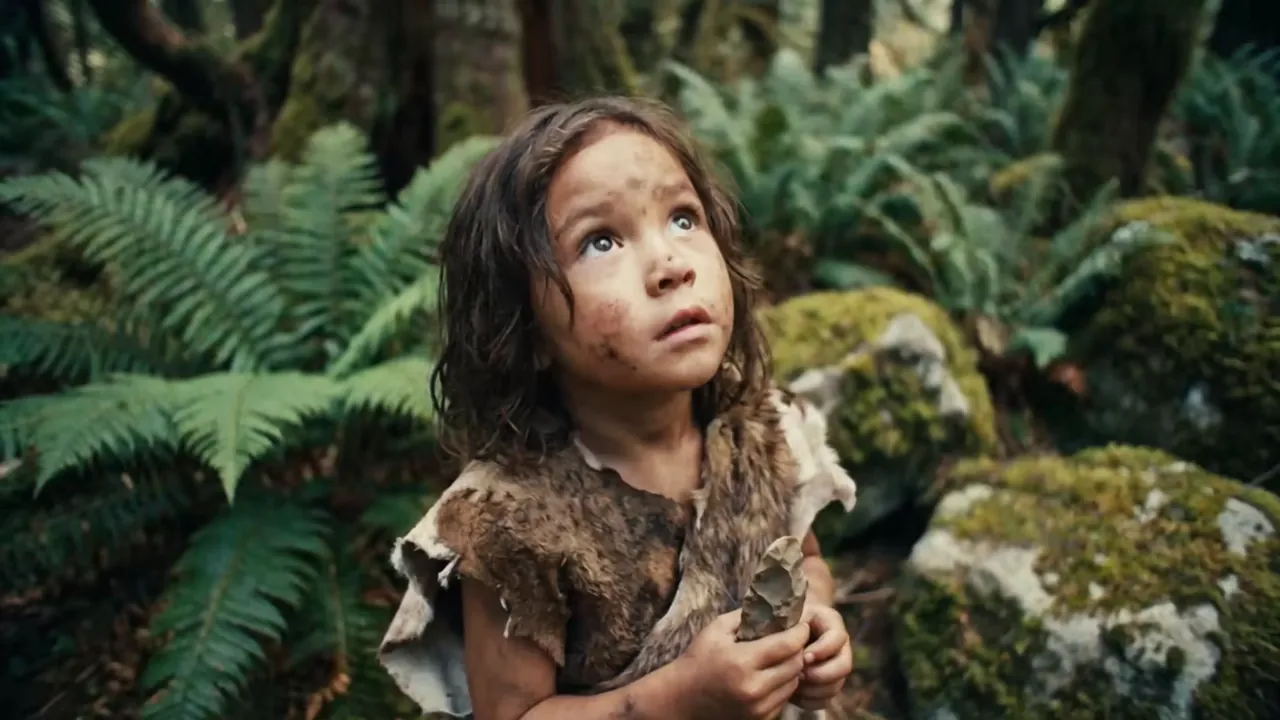
Multishot generation · 22B class
Choose it if: one clip has to carry several cuts with the same character.
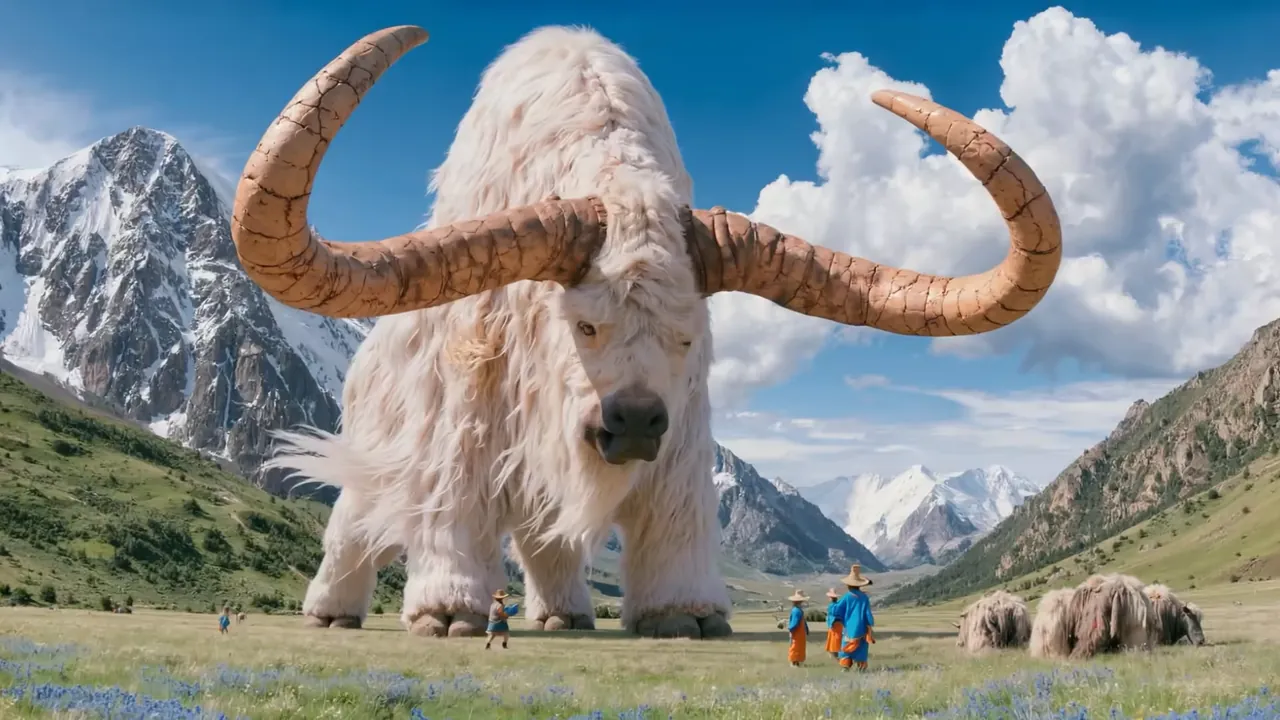
Explore the multimodal capabilities of the LTX model — use prompts to generate high-quality videos for cinematic production. Turn images into realistic videos in seconds, transform real memories into masterful documentaries. More powerfully, LTX excels at modifying video scenes, allowing you to remake video segments and restructure content without professional skills. This advanced AI delivers professional-quality video generation across diverse creative projects, maintaining complex character consistency to help you perfectly realize all your ideas.

A serene, hidden cave pool with crystal-clear turquoise water and smooth stones beneath the surface, illuminated by dramatic beams of sunlight pouring through an opening above. Sunlight filters down in shifting rays as leaves dangle gently overhead. The water glistens and ripples softly, creating a mesmerizing dance of light across the cave walls and stone floor. The cave's textured rock walls are dappled with light and shadow, with hanging vines and greenery trailing through the skylight. Beyond the lit area, the cavern fades into cool, mysterious shadows. The vine leaves sway gently in the breeze, and soft currents in the pool create shimmering refractions on the rocky ceiling and walls. Occasional droplets of water fall from the cave roof into the lagoon. A slow dolly-in across the water's surface, gliding just above the glowing stones. The camera then tilts upward toward the cascading sunlight and hanging greenery, revealing the full height and intimacy of the cavern.
Browser, API or your own GPUs — all three reach the same models.
Online
Open a hosted playground in the browser and start from a text prompt or a reference image. No install, no GPU, no account setup on your side — you get a credit balance, a preset library, and native 4K export.
Try it in the playground
API
Send text-to-video and image-to-video jobs over HTTP and receive audio-visual clips in a single pass. Model IDs, durations, resolutions, keyframes and audio options are all request parameters, so you can wire LTX into your own product.
View the API docs
Self-hosted
Download the open weights from Hugging Face, run them with the Diffusers or ComfyUI workflows, and fine-tune on LoRAs for your own style. Your footage never leaves your infrastructure.
Get the open weights
Once access is sorted, every generation follows the same five stages. Here is what each one changes.
Choose text-to-video when you are starting from an idea, or image-to-video when you already have a keyframe, character sheet or product shot. Then select the LTX version: LTX-2.5 for the newest quality, LTX-2 for balanced cost, or LTXV for LoRA-driven creative experiments.
Describe the subject, the action, the camera move, the lighting and the style in that order. Keep one clear subject in motion, name the shot type (close-up, dolly-in, handheld), and state what should stay constant — character look, wardrobe, palette.
Pick the aspect ratio and resolution your destination needs, keep clips within the model's supported length, and choose whether audio should be generated in the same pass. Sync audio line up with lip movement far better than audio added in post.
Run the job — most LTX generations finish in seconds on the hosted tiers. Watch for flicker, morphing limbs or drift in the background, then write the change into the prompt rather than re-rolling blindly.
Extend a good shot with multishot generation or keyframes, upscale toward 4K, then export the file and keep the prompt and seed with it so the shot can be reproduced later.
Tip: when a result fails, change one variable at a time — prompt wording, seed, or model version. That way you learn what actually moved the output.
Step into the world of LTX video generation and explore diverse creative applications — from cinematic storytelling and dynamic social content to professional presentations and artistic projects. LTX empowers creators to transform ideas into stunning visuals across every scenario.
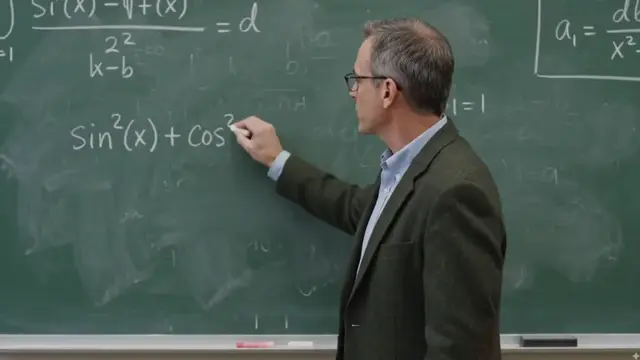
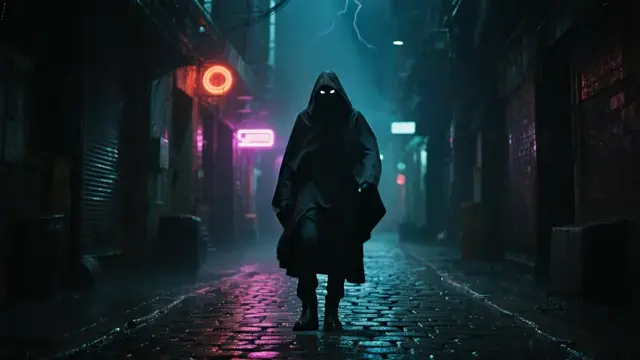


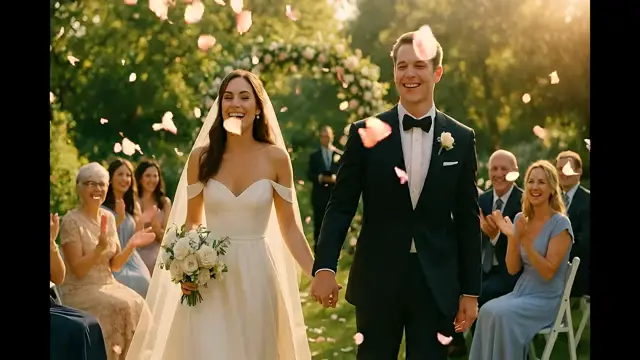





Real posts from the community — from LTX-2.3 image-to-video tests to multishot sequences with synced audio. Open any card to read the original thread on X.
ハカセ アイ(Ai-Hakase)🐾生成AI・ComfyUI
@ai_hakase_
🎬【AI動画の革命】顔が変わる悩み、もう卒業しませんか? 「Wan 2.2」と「LTX 2.3」を組み合わせた、究極のハイブリッド・ワークフローがついに登場しました!✨ キャラクターの顔をしっかり維持しながら、音付きの長尺動画が思い通りに作れるんです!🚀 👇️ このスレッドで解説していきます!

Spectro
@Spectromachina
Same prompt, same starting image, one is google omni, one is LTX 2.3 I generated for free with my GPU. You be the judge. Omni is great for editing, not so great for creating videos. @LTXStudio @GoogleDeepMind


R@aiaicreate
@aiaicreate
LTX 2.3の動画生成において、既存の有名楽曲に酷似した音声が生成されたとの報告。 学習データに含まれる著作物の出力の可能性を示唆する声。 #LTX #動画生成AI URLはリプ⬇️


Wildminder
@wildmindai
LTX is cooking hard. Just-Dub-It IC LoRA, and you can dub anything. - Instead of separate steps for voice and lips, it generates them simultaneously - handles occlusions and profile views - beats HeyGen/MuseTalk - maintains bg noise and speaker identity also it stretches the video and audio together so the pacing matches the new language perfectly. Just awesome! https://justdubit.github.io/

Wildminder
@wildmindai
LTX2.3 OmniNFT RL-LoRA generates high-quality video/audio + visuals and sound are perfectly synchronized, no laggy or mismatched audio - realistic Lip-Sync - action-matched sound - reduces synchronization errors by 52% really nice output https://zghhui.github.io/OmniNFT/


Hirokazu Yokohara
@Yokohara_h
生成した動画をHDR化するLTX-2.3のHDR LoRAのテスト EXRで書き出せるから撮影素材やCGと馴染ませたりグレーディングが可能になるやつ ローカルでも動くし白飛びも復元されてて品質悪くないのでこれは常用

Creators, developers and teams on what LTX itself gets right — generation speed, synchronized audio, temporal consistency and open weights.
“LTX 2.5 renders a usable 720p shot in a couple of seconds. What used to be a coffee break is now a button press — I storyboard directly in the generator.”

Alex Chen
LTX 2.5 user · short-form video producer
“The dual-stream architecture is the real story. LTX generates dialogue and lip movement in one pass, so I stopped fixing twelve mouth frames for every line of VO.”

Sarah Kim
LTX-2 user · ad creative director
“We run LTX open weights on our own cluster and fine-tuned a LoRA for our house style. Footage never leaves the building, and the licence terms actually let us do it.”

Marcus Johnson
Self-hosting LTX-2 · media CTO
“Temporal consistency is where LTX beat everything else we tested. Characters keep their faces and wardrobe across cuts — I have never seen that hold at this speed.”

Yuki Tanaka
LTX 2.5 user · independent filmmaker
“Multishot generation changed our ad workflow. One prompt produces a sequence that stays consistent across cuts, so we stopped stitching separate clips in the edit.”

Emily Rodriguez
LTX-2 user · performance marketing lead
“Native 4K portrait output plus the API means client revisions are a parameter change, not a reshoot. LTX is the first model our clients ask for by name.”

David Park
LTX API user · freelance post-production artist
Everything about using, deploying and prompting LTX — plus parameters, best-fit use cases, licensing and where to join the community.
Two things. LTX generates picture and synchronized audio in a single unified pass — dialogue, lip movement and ambience are produced together instead of dubbed on afterwards — and the core models ship as open weights you can fine-tune and deploy yourself. On the quality side it holds characters, wardrobe and scenes steady across cuts, because temporal consistency is treated as a first-class problem rather than a post-step.
On hosted tiers most LTX generations finish in seconds rather than minutes, which is what makes prompt iteration practical — you can re-roll a shot several times in the time a slower model needs for one. Local generation speed depends on your hardware, the model version, resolution, clip length and whether audio is enabled.
Mode: text-to-video, image-to-video, keyframes and multishot. Model version: LTXV, LTX-2, LTX-2.3 or LTX-2.5. Output: resolution and aspect ratio (native 4K and portrait included), clip length up to 20 seconds, frame rate up to 50 fps, audio on or off, plus a seed for reproducibility and LoRAs for style and camera control. For image input, LTX reads JPG, PNG and WEBP keyframes.
The open weights are free for organizations under $10 million in annual recurring revenue; larger companies negotiate a licence with Lightricks. On hosted services you pay per generation — LTX-2.5 Fast is around $0.09 per second of 720p video with audio. Running LTX on this site uses credits per generation, so the limit is your balance, not a model-imposed quota.
Yes. The open model weights may be used commercially — free for organizations under $10 million in annual recurring revenue, with a negotiated licence above that threshold. Output from the hosted tiers is available for commercial work under the provider's terms. Always check the model card on Hugging Face for the version you deploy.
That depends on how you run it. Through a hosted service, your prompts and outputs are governed by that provider's retention policy. Self-hosted, LTX-2 runs entirely on your own hardware, so footage and prompts never leave your infrastructure. This is the main reason teams with sensitive material choose the open weights.
Three routes reach the same models: use it in the browser through a hosted playground, call the API from your own product, or download the open weights from Hugging Face and run them with Diffusers or ComfyUI. You are choosing a delivery method, not a different model.
Describe in this order: subject, action, camera move, lighting, then style. Keep one clear subject in motion, name the shot type (close-up, dolly-in, handheld), and state what must stay constant — face, wardrobe, palette. When a result misses, change one variable at a time — wording, seed or model version — so you learn what actually moved the output.
Yes — LTX-2 ships open weights, code and tooling for on-premise use. Under NVFP8 quantization it runs on consumer-grade GPUs with 16 GB of VRAM, and larger fleets scale with resolution, clip length and batch size.
LTX is strongest for fast iteration, consistent characters across cuts, synchronized dialogue and lip movement, and product or ad shots with a clear subject. It is a weaker fit for long-form narratives with many distinct characters, or footage where every background detail must be pixel-perfect from a single still.
Follow @ltx_io on X for releases and demos, join the official Discord for usage questions and community workflows, and watch the Lightricks GitHub and Hugging Face pages for weight drops, LoRAs and documentation.
Join thousands of creators generating video with LTX. Start with 30 free credits — no credit card required, and text, image and audio-driven workflows in one place.